Home › Technology › AI-Driven Datacenters & NVIDIA
AI-Driven Datacenters & NVIDIA:
The $7 Trillion Intelligent Infrastructure Revolution
From Blackwell GPUs and AI Factories to 800V DC power grids and sovereign AI clouds — discover how NVIDIA is single-handedly redefining what a datacenter means in the age of artificial intelligence.

📋 Table of Contents
- The New Definition of a Datacenter
- Rise of the AI Factory
- Blackwell Architecture: The Performance Frontier
- 800V DC Power: Engineering for Gigawatt Scale
- The $119 Billion GPU Market & Growth Outlook
- NVIDIA's Full-Stack Ecosystem
- Sovereign AI & Global Deployment
- The GPU Roadmap: Rubin, Ultra & Beyond
- Challenges: Power, Heat & Geopolitics
- Conclusion: What Comes Next
1. The New Definition of a Datacenter
For decades, datacenters were passive repositories — warehouses that stored and moved data on demand. Rows of servers hummed quietly, cooling fans droned in cycles, and the primary metric of success was uptime. That era is over.
In 2025, the datacenter has been reborn as something fundamentally different: a manufacturing plant for intelligence. Coined by NVIDIA CEO Jensen Huang, the term "AI Factory" captures this transformation perfectly. These facilities don't just process requests — they actively generate, refine, and deploy AI-powered intelligence at a scale previously unimaginable.
At the center of this revolution stands one company: NVIDIA. With a market capitalization that briefly hit $4 trillion in 2025, NVIDIA has evolved from a gaming GPU maker into the central architect of the world's AI infrastructure — controlling everything from the chip die to the power grid blueprint.
$119.97B
Global Datacenter GPU Market Value in 2025
13.7%
CAGR Growth Rate (2025–2030)
$7T
Projected AI Infrastructure Market by 2030
~48%
NVIDIA's Share of the Datacenter GPU Market
2. Rise of the AI Factory
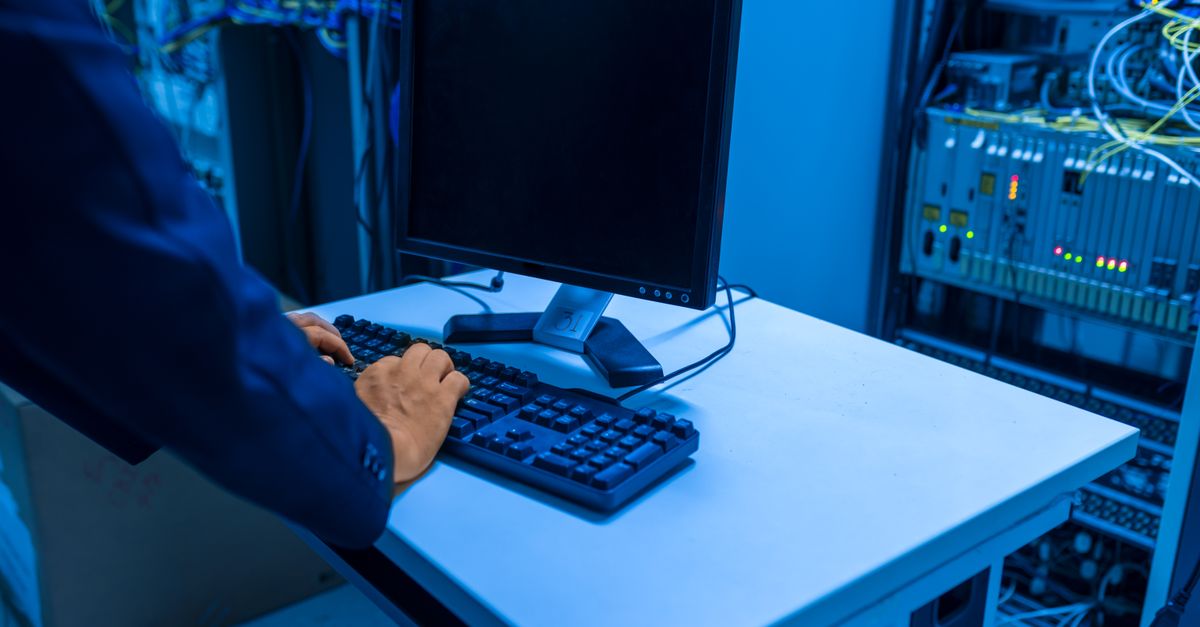
Jensen Huang's concept of the "AI Factory" is not just marketing language — it is a genuine architectural and philosophical shift. Traditional datacenters optimized for bandwidth and storage. AI Factories optimize for intelligence throughput: the ability to ingest raw data and output trained models, inferences, and real-time decisions.
The 2025 buildout of AI Factories has been staggering in scale. Major hyperscalers are each deploying nearly 1,000 NVL72 racks — equivalent to 72,000 Blackwell GPUs — every single week. Conservative estimates suggest 2.5 million Blackwell GB200 GPUs were shipped through 2025 alone.
💡 What Is an AI Factory?
An AI Factory is a class of datacenter purpose-built not to store data but to manufacture intelligence. It combines dense GPU clusters, high-speed NVLink/InfiniBand/Ethernet interconnects, advanced cooling, high-voltage DC power, and AI software stacks to continuously train, fine-tune, and serve AI models at industrial scale.
NVIDIA moved beyond simply selling GPUs into orchestrating the entire AI Factory blueprint — from silicon to cooling to power infrastructure. Their Omniverse DSX (Datacenter Simulation & eXecution) platform creates a digital twin of the entire facility, helping operators design, simulate, and optimize gigawatt-scale AI Factories before a single rack is installed.
The financial commitments backing AI Factories in 2025 read like a geopolitical arms race: Meta's $600 billion AI infrastructure plan, Oracle's $40 billion purchase of 400,000 GB200 GPUs for an OpenAI-leased Texas facility, and NVIDIA's own pledge to invest $500 billion in U.S. manufacturing and AI infrastructure over four years.
3. Blackwell Architecture: The Performance Frontier
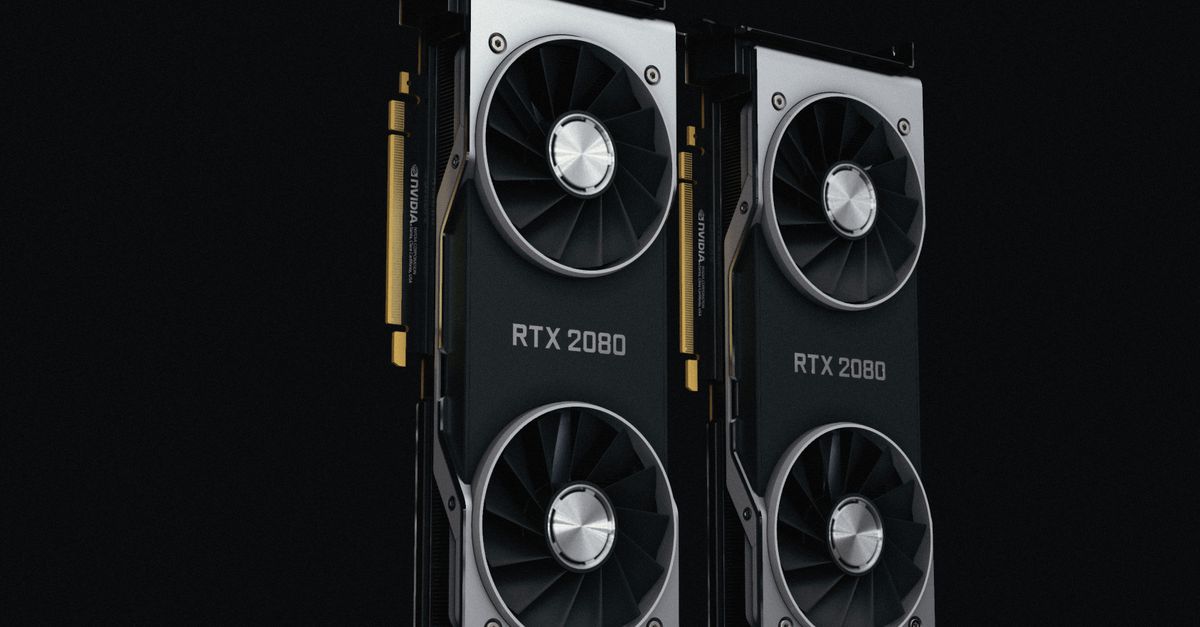
2025 was, unambiguously, the year of Blackwell. NVIDIA's Blackwell GPU architecture — led by the B200 and GB200 (Grace Blackwell SuperChip) — delivered a generational leap in AI compute performance, memory bandwidth, and energy efficiency over its predecessor, Hopper (H100/H200).
| Architecture | Launch | Memory | Bandwidth | Rack-Scale Perf. |
|---|---|---|---|---|
| Hopper (H100) | 2022–2023 | 80 GB HBM3 | 3.35 TB/s | — |
| Hopper (H200) | 2024–2025 | 141 GB HBM3e | 4.89 TB/s | — |
| Blackwell (B200) | 2025 | 192 GB HBM3e | 8 TB/s | 1 ExaFLOP FP4 (NVL72) |
| Blackwell Ultra (B300) | H2 2025 | 288 GB HBM3e | 8 TB/s | 1.1 ExaFLOPS FP4 (NVL72) |
| Vera Rubin | H2 2026 | 288 GB HBM4 | 13 TB/s | 3.6 ExaFLOPS FP4 (NVL144) |
The NVL72 rack — 72 Blackwell GPUs interconnected via NVLink — represents the fundamental unit of the AI Factory. Each NVL72 rack delivers up to 1 ExaFLOP of FP4 compute, meaning a single rack has more raw AI power than the world's most powerful supercomputers had just a few years ago.
In October 2025, Microsoft deployed one of the most extreme AI clusters ever assembled on Azure: a GB300 NVL72 supercomputer powered by 4,608 Blackwell Ultra GPUs, purpose-built for OpenAI's frontier workloads. This single cluster represents a new benchmark for what AI compute infrastructure can achieve.
4. 800V DC Power: Engineering for Gigawatt Scale
One of the most underappreciated but critical breakthroughs of 2025 was NVIDIA's push for a new electrical standard: 800 Volt DC (800V DC) power architecture. This shift from traditional low-voltage AC distribution is essential for enabling the 1 megawatt (MW) per rack densities required by Blackwell and future GPU generations.
NVIDIA's partnerships with power infrastructure giants are cementing 800V DC as the new industry standard. Collaborations with ABB (October 2025), Eaton (July 2025), and Schneider Electric (June 2025) produced reference designs for next-generation high-density AI datacenters specifically optimized for the 800V architecture.
The DSX OS software — NVIDIA's operating system for the AI factory — extends this further with MaxLPS, a technology that performs real-time monitoring and power provisioning for every GPU, every rack, and every row across the entire datacenter. The result: operators can safely deploy 40% more GPUs within the same power budget — translating directly to 40% more compute revenue per watt spent.
5. The $119 Billion GPU Market & Growth Outlook
The numbers speak for themselves. The global datacenter GPU market was valued at $119.97 billion in 2025 and is projected to reach $228.04 billion by 2030, at a compound annual growth rate (CAGR) of 13.7%. GPUs accounted for 82% of total AI chip revenue in 2024, and that share is growing.
📈 Datacenter GPU Market Growth (2025–2030, USD Billion)
Source: MarketsandMarkets 2025 | CAGR 13.7%
The primary growth drivers are clear: generative AI workloads (LLMs, diffusion models, multimodal AI), enterprise AI adoption, and massive cloud infrastructure expansion by AWS, Azure, and Google Cloud. By 2025, over 70% of enterprise cloud platforms incorporated GPU clusters for AI workload optimization.
On-premises deployment — companies building their own GPU clusters — is projected to grow at the fastest sub-segment CAGR of 15.7% (2025–2030), driven by enterprises demanding dedicated, secure GPU infrastructure for sensitive AI workloads in finance, healthcare, and defense.
6. NVIDIA's Full-Stack Ecosystem

NVIDIA's dominance isn't merely about GPU silicon. It's the result of a meticulously architected full-stack ecosystem that creates deep switching costs and compounds competitive advantages at every layer:
🔵 Silicon Layer — Blackwell GPUs + Grace CPUs
B200, GB200, H200 — the raw compute powerhouses. CUDA cores, Tensor Cores (NV FP4), NVLink interconnect delivering multi-terabyte/second bandwidth between GPUs in a single rack.
🔵 Networking Layer — InfiniBand & Spectrum-X Ethernet
QuantumX InfiniBand for supercomputer-grade clusters; Spectrum-X Ethernet for mass-market enterprise AI. BlueField-4 DPUs handle 800 Gbps network offload, freeing GPUs for pure AI compute.
🔵 Software Layer — CUDA-X & 900+ Optimized Libraries
cuBLAS, cuDNN, cuGraph, cuDF, cuOpt — over 900 domain-specific CUDA-X libraries spanning AI, HPC, genomics, drug discovery, financial analytics, and chip design simulation.
🔵 Deployment Layer — NVIDIA NIMs
NVIDIA Inference Microservices (NIMs) are pre-packaged AI model containers that allow instant deployment of generative AI anywhere — cloud, on-premises, or even on a laptop — with zero infrastructure complexity.
🔵 Operations Layer — DSX OS
Datacenter Simulation & eXecution OS — digital twin simulation (DSX Sim), real-time power management (DSX MaxLPS), and grid-connectivity (DSX Flex) — the operating system of the AI Factory itself.
This vertical integration — from the physics of transistors to the deployment of finished AI models — is what makes NVIDIA's moat so formidable. A competitor can build a faster chip; they cannot easily replicate 900+ optimized libraries, a decade of CUDA developer lock-in, and a full datacenter operating system simultaneously.
7. Sovereign AI & Global Datacenter Deployment
2025 marked the emergence of a powerful new geopolitical trend: Sovereign AI. Nations and regions across the globe — Japan, France, the United Kingdom, UAE, Saudi Arabia, and Southeast Asia — began constructing their own national AI clouds using NVIDIA hardware. The motivation is twofold: data sovereignty (keeping sensitive national data on domestic soil) and strategic independence from U.S. hyperscalers.
| Partner / Project | Investment | Strategic Purpose |
|---|---|---|
| Meta | $600 Billion | Next-gen AI-ready datacenter fleet (U.S.) |
| NVIDIA (U.S. Manufacturing) | $500 Billion | 4-year domestic AI infrastructure buildout |
| Oracle / OpenAI Texas DC | $40 Billion | 400,000 GB200 GPUs; leased to OpenAI |
| BlackRock / NVIDIA / Microsoft | $40 Billion | Acquired Aligned Data Centers (~80 facilities) |
| NVIDIA → OpenAI | $100 Billion | 10 GW of AI datacenter capacity deployment |
| NVIDIA & YTL Power (Malaysia) | $4.3 Billion | AI cloud & supercomputer in green datacenter park |
The Asia-Pacific region is expected to be the fastest-growing market for datacenter GPUs, driven by China's "New Infrastructure" policy, India's rapidly expanding tech ecosystem, and major AI investments by Alibaba Cloud, Tencent Cloud, Baidu, Naver (South Korea), and NEC/Fujitsu (Japan).
8. The GPU Roadmap: Rubin, Ultra & Beyond
At GTC 2025, Jensen Huang unveiled the most detailed multi-generation GPU roadmap NVIDIA has ever publicly committed to — a bold signal of confidence in sustained AI infrastructure demand for years to come.
2025 — Current
Blackwell Ultra (B300 / GB300)
TSMC 4nm · 288 GB HBM3e · 8 TB/s bandwidth · 1.1 ExaFLOPS FP4 per NVL72 rack. The current performance frontier, deployed in Azure's OpenAI supercluster with 4,608 GPUs.
H2 2026 — Upcoming
Vera Rubin (Rubin GPU + Vera CPU)
TSMC 3nm · 288 GB HBM4 · 13 TB/s bandwidth · 3.6 ExaFLOPS FP4 per NVL144 rack. A 3x performance jump over Blackwell Ultra at rack scale — the next frontier of AI compute.
H2 2027 — Planned
Rubin Ultra
Four compute chiplets · 1 TB HBM4E memory · Next-generation HBM4 bandwidth. Targeting 10+ ExaFLOPS per rack equivalent, designed for trillion-parameter model training at industrial scale.
2028 — Horizon
Feynman
Named after Nobel laureate Richard Feynman. Architecture and specs remain under wraps — but NVIDIA's commitment to an annual-cadence roadmap means performance improvements of 3–5x per generation will continue.
9. Challenges: Power, Heat & Geopolitics

No technology story of this magnitude comes without significant challenges. For AI-driven datacenters in 2025, three major headwinds are reshaping strategy:
⚡
The Power Crisis
Grid instability has become the primary bottleneck. A single Blackwell NVL72 rack can consume 1 megawatt. Large AI campuses require hundreds of megawatts — straining local power grids and forcing operators toward on-site nuclear microreactors and renewable installations.
🌡️
Thermal Management
1 MW per rack demands direct liquid cooling (DLC) as mandatory infrastructure. Air cooling is simply incapable of handling these thermal loads. This is driving a complete re-engineering of datacenter facility design — from raised floors to immersion cooling tanks.
🌐
Export Controls & Geopolitics
U.S. export controls on advanced AI chips — including H20 licensing requirements for China (April 2025) — have created new market fragmentation. Nations are accelerating domestic chip development (China's Huawei Ascend series), while NVIDIA must navigate complex regulatory compliance across 100+ markets.
📌 The ESG Imperative
AI datacenters are facing growing ESG scrutiny. Industry commitments include a 30% reduction in energy consumption per GPU server by 2026 through advanced liquid cooling, and AI-powered predictive maintenance that's expected to improve server uptime by 22% by 2027, reducing energy waste from idle compute cycles.
10. Conclusion: What Comes Next
The story of AI-driven datacenters and NVIDIA is ultimately a story about the industrialization of intelligence. Just as the 20th century was defined by factories that mass-produced physical goods, the 21st century is being defined by AI Factories that mass-produce intelligence — the most valuable commodity in human history.
NVIDIA, through a combination of silicon innovation, software depth, infrastructure investment, and strategic ecosystem building, has positioned itself as the indispensable platform for this industrial revolution. With the Blackwell architecture at full production, the Vera Rubin generation on the horizon, and $500+ billion in committed global infrastructure investment, the trajectory is clear.
The key questions for the next five years aren't whether AI datacenter demand will grow — the $7 trillion market projection answers that definitively. The real questions are: Who can solve the power crisis at the speed AI demands? Which nations will build sovereign AI capacity? And can any challenger displace CUDA's two-decade head start?
🏷 Tags:
TechInsight Editorial Team
Covering AI infrastructure, semiconductor innovation, and enterprise technology since 2018.
We analyze the technologies, companies, and trends reshaping how the world computes — from chip architecture to global data center investment strategy.
Disclaimer: This article is for informational purposes only. Market data sourced from MarketsandMarkets, IDTechEx, NVIDIA investor relations, and publicly available financial disclosures. All figures are estimates and subject to change. Images courtesy of Pexels (Nana Dua, panumas nikhomkhai). This article was originally published on TechInsight. All rights reserved © 2025.